
Commentary · October 3, 2026 · New Hampshire
So New Hampshire has a formula designed to compensate for differences in fiscal capacity while simultaneously relying increasingly on the revenue source whose capacity varies most dramatically from town to town. That tension is at the center of the funding debate.
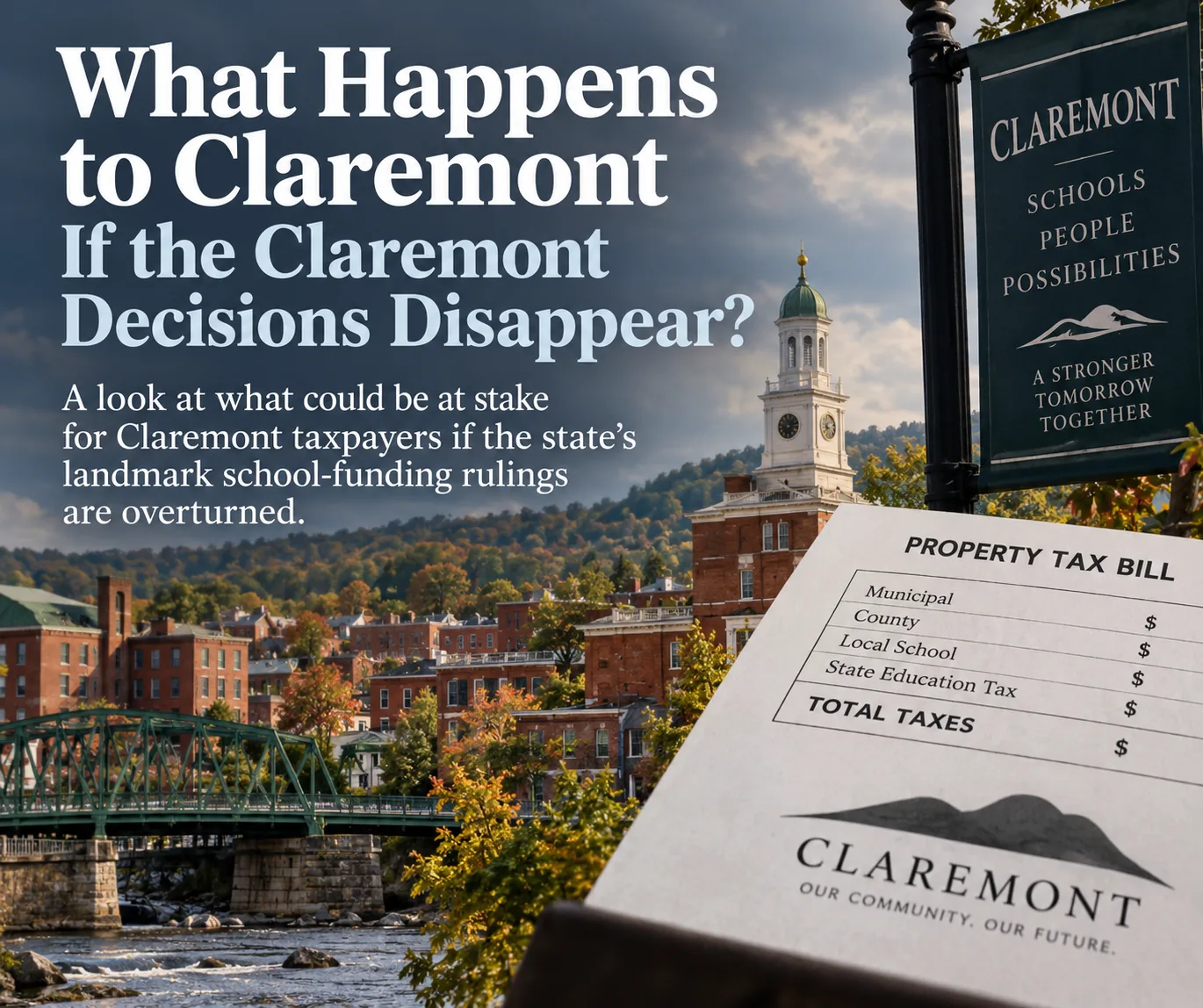
Commentary · September 19, 2026 · Claremont
This isn’t a debate about saving homeowners $50 or $100. For Claremont, shifting even part of the state’s current contribution back onto the local tax base could mean four-figure annual increases for an ordinary homeowner.

Commentary · September 8, 2026 · Bedford
Bedford sends seven representatives to Concord. Once there, those representatives vote on statewide budgets, education policy, housing policy, municipal authority and dozens of other decisions whose effects eventually return home.

Explainer · August 28, 2026 · New Hampshire
HB 1300 limits growth in the local school tax levy and caps SAU central-office spending. Neither provision identifies a cost the district stops owing.
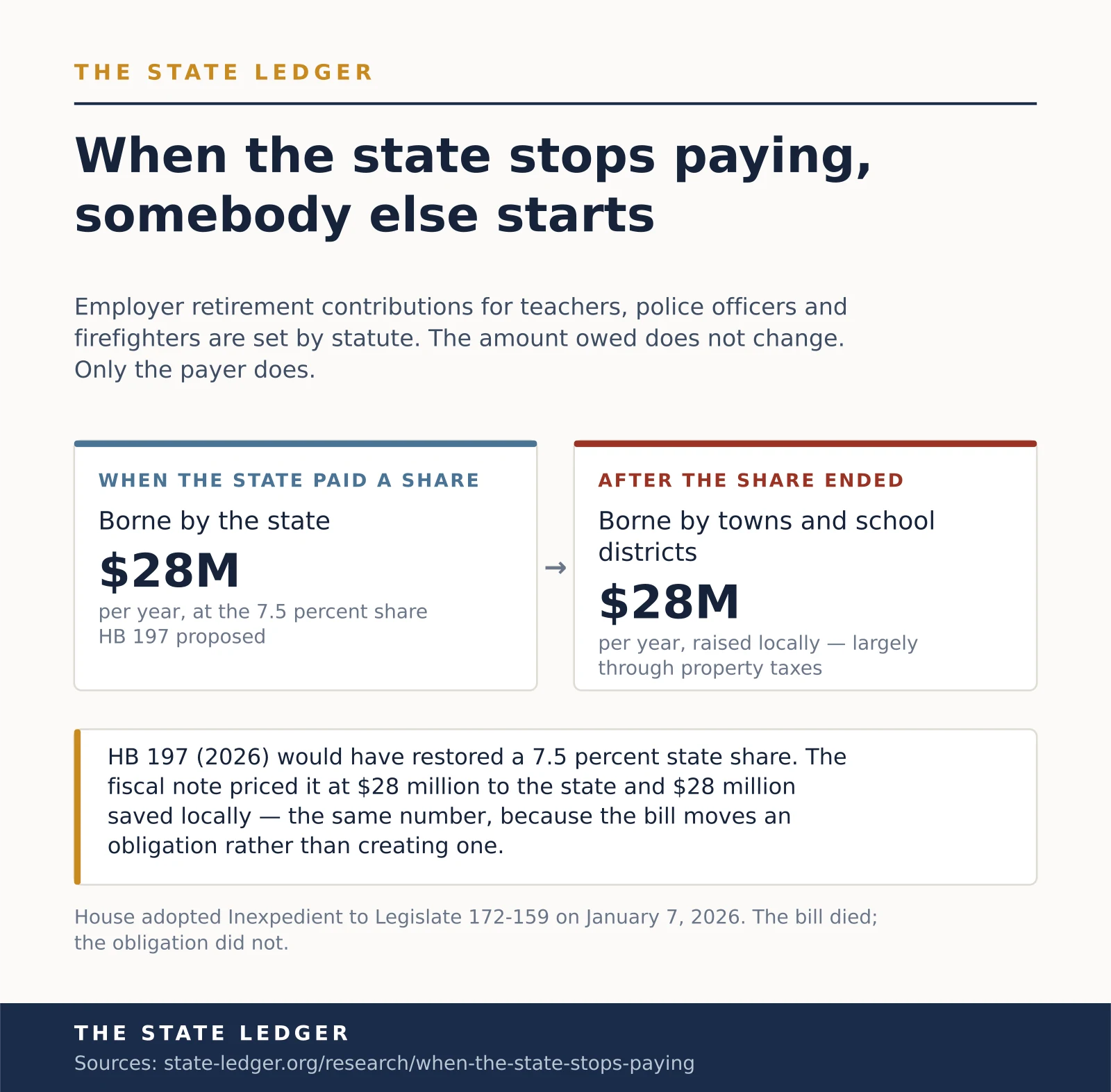
Explainer · August 28, 2026 · New Hampshire
A cost the state stops carrying does not stop existing. What the record supports is a fiscal-capacity argument, not a one-to-one claim that every dollar of forgone state revenue became a dollar of property tax.
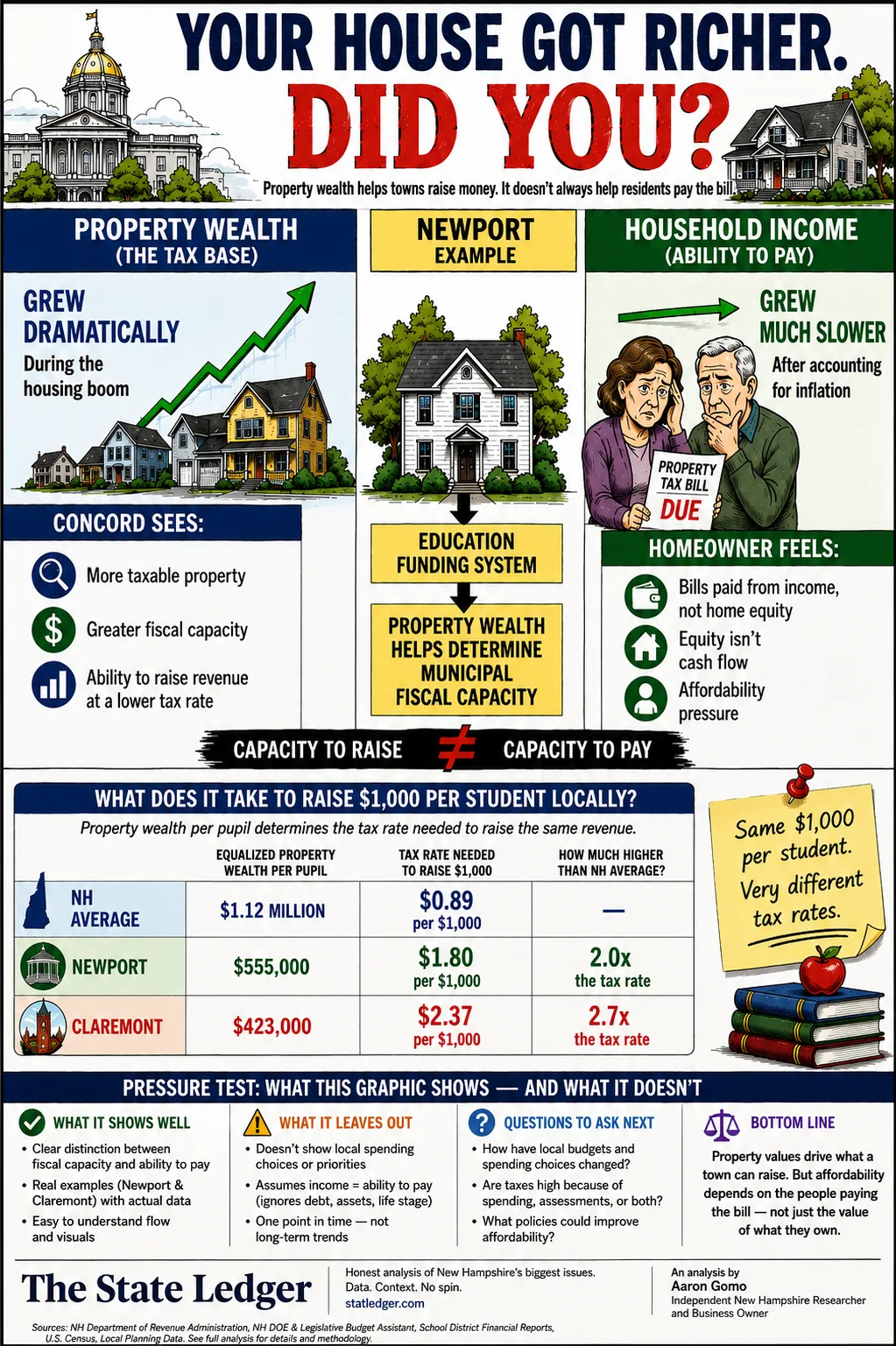
Explainer · August 26, 2026 · New Hampshire
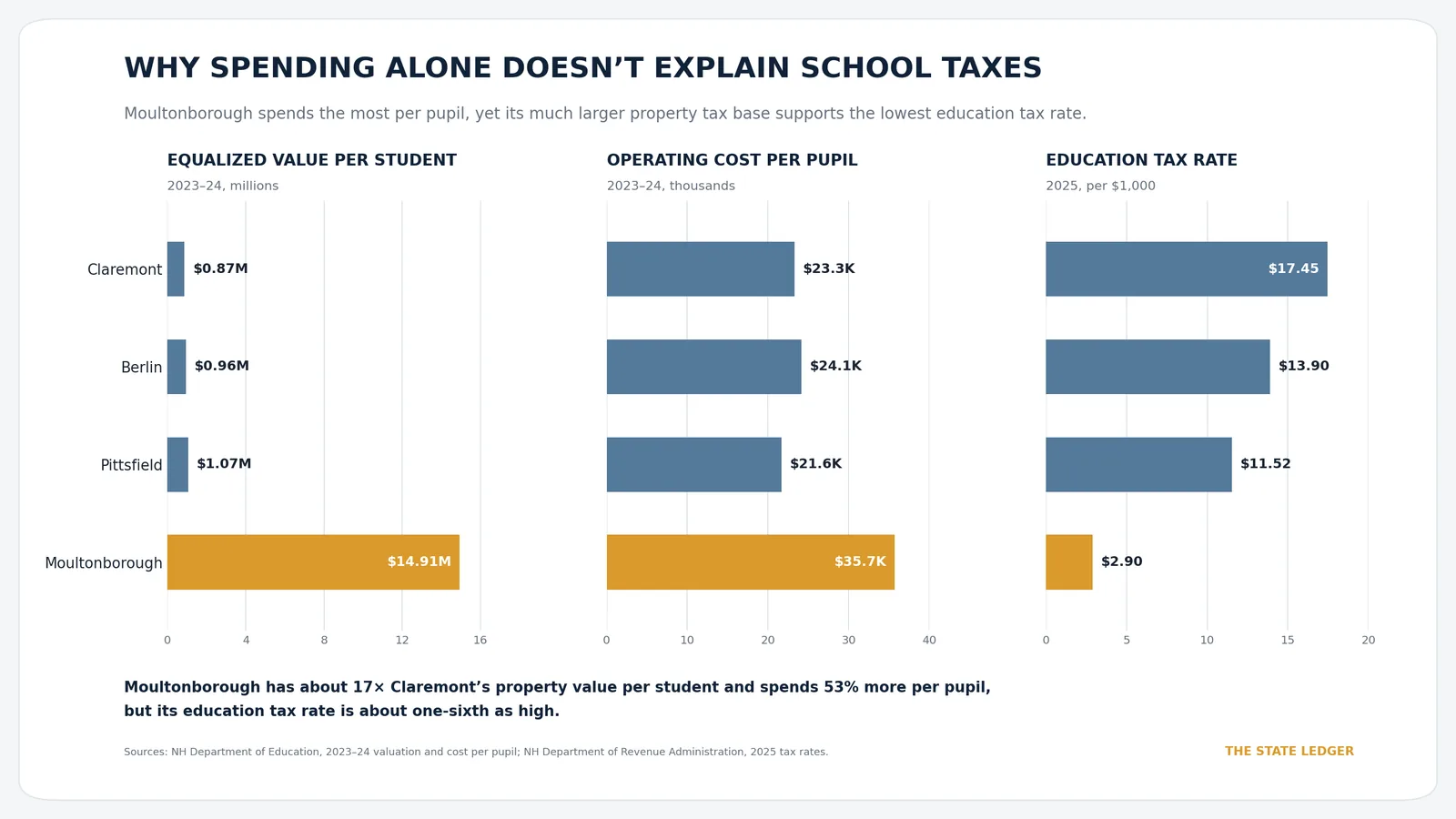
Two towns can need the same money per student and set very different tax rates, because the property standing behind each student is different.
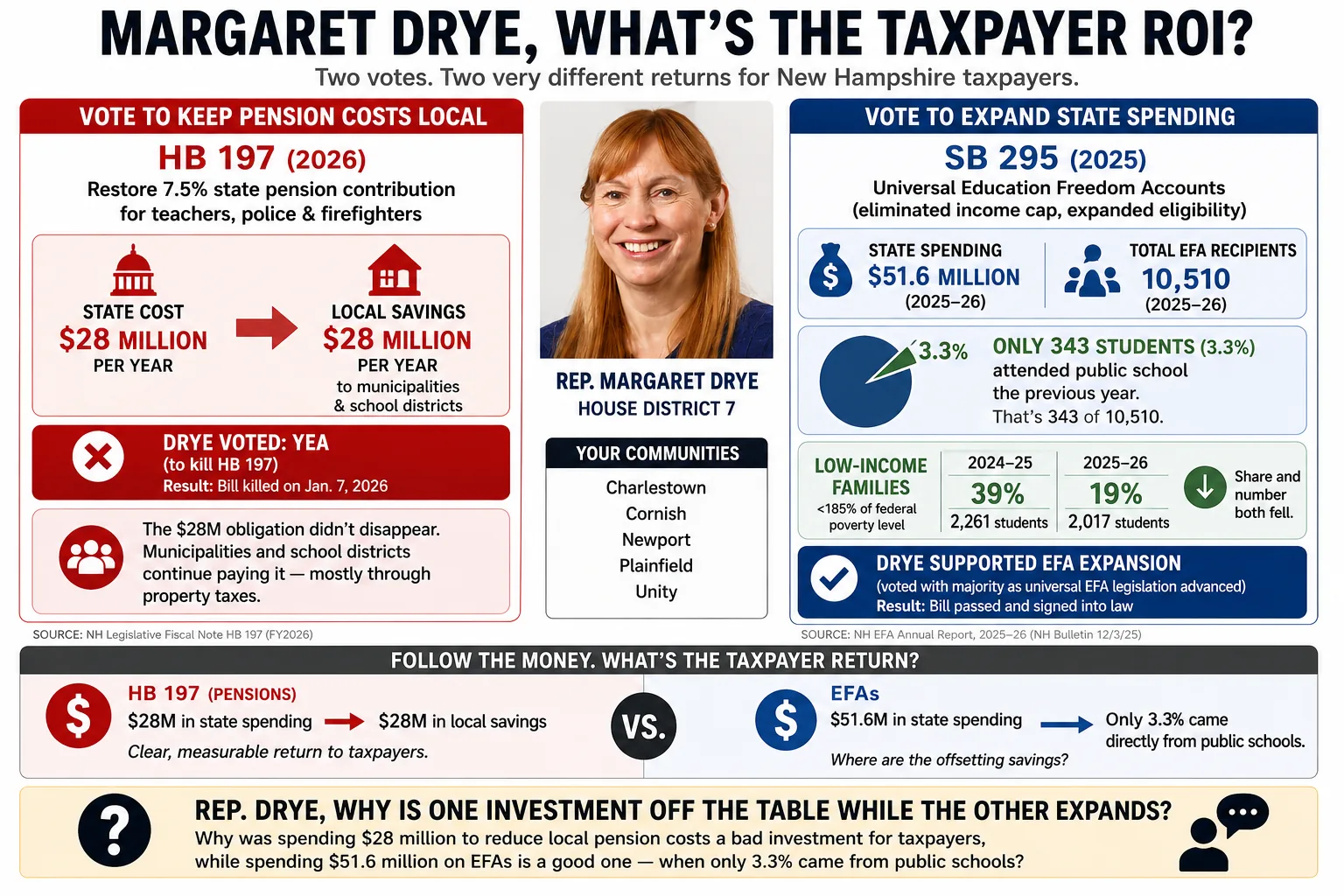
Scorecard · August 25, 2026 · Sullivan County
A comparison of two decisions by the representative for Sullivan County District 7: a bill that would have moved $28 million of pension cost off local property taxes, and an expansion of state education spending to $51.6 million.
Model · August 24, 2026 · New Hampshire
A four-town comparison of property value per student, operating cost per pupil and the resulting education tax rate.

Commentary · August 18, 2026 · New Hampshire
An editorial graphic about deferred cost — the practice of recording a saving now by postponing an obligation that grows while it waits.